💰 서론
학교 캡스톤디자인에서, AWS 인프라를 풀로 가동할 예산에 무리가 있다.
그러나, 실제 운영환경이 아닌, 개발 환경이며, 24/7로 가동할 이유가 없다.
NAT Gateway는 프로비저닝되어있는 동안, 그 자체로 비용이 꽤 나가기에, 야간 등 팀이 작업하지 않을 때에는 닫아놓아도 된다.
작업하지 않을 때 꺼두기만 해도 큰 지출을 줄일 수 있을 것이다.
💡 전략
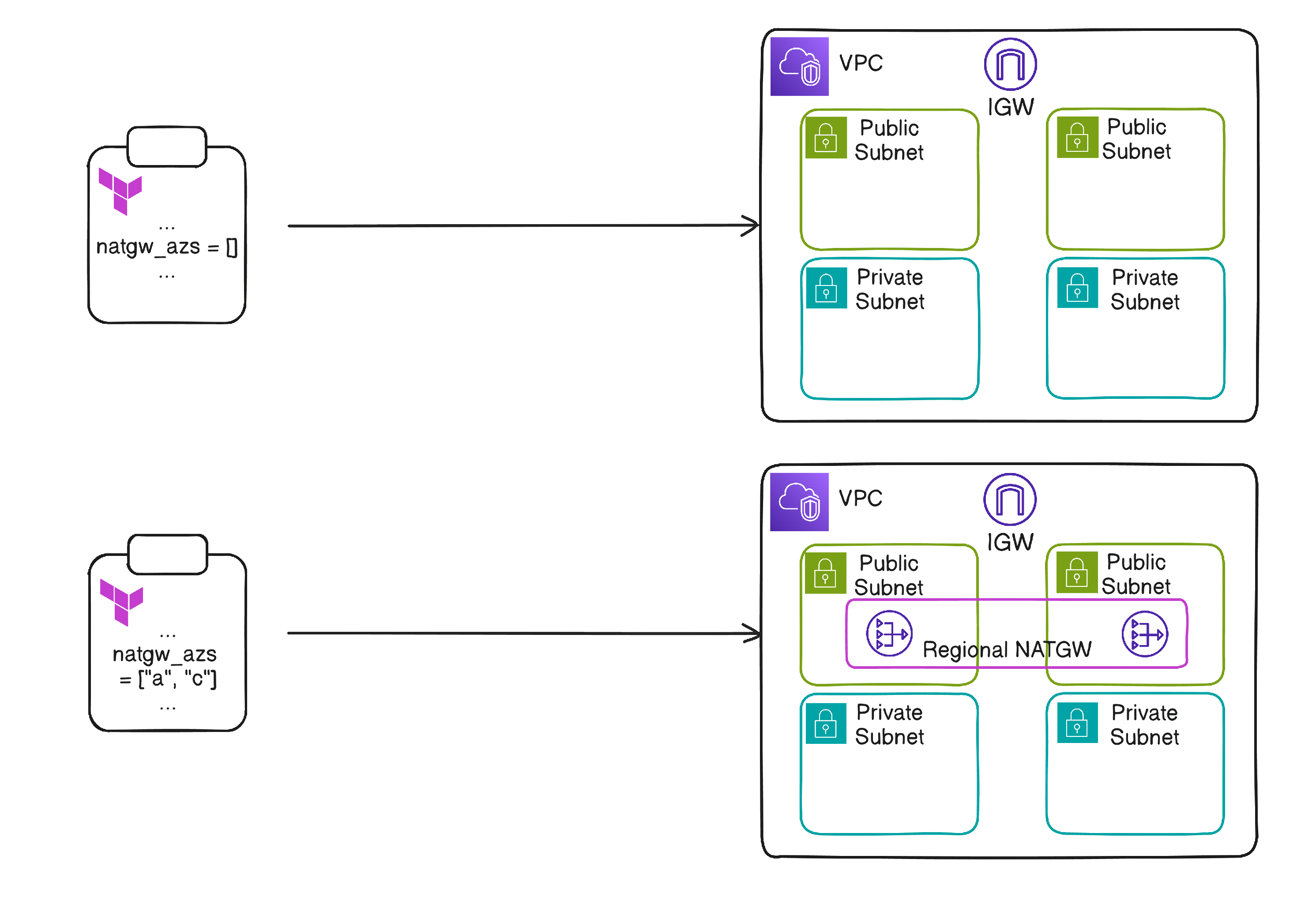
NAT Gateway를 natgw_azs라는 변수를 통해 토글하면 된다.
natgw_azs는 list(string)의 타입으로, Regional NAT Gateway의 EIP를 할당하는 az를 정하게 하는데, 만약 비어있다면, NAT Gateway와 관련 라우팅 테이블 엔트리를 생성하지 않으면 된다.
만약 생성된 상태여도, 비우고 새로 apply하게 되면, 사라질 것이다.
이러한 구조로 모듈을 설계하면, NAT Gateway와 라우팅 테이블 엔트리를 조건부터 생성할 수 있게 되고, 자동화 도구와 추후 연계하여 비용을 절감할 수 있을 것이다.
Module
이 모듈은 natgw_azs가 한 개 이상의 요소를 가질 때 Regional NAT Gateway를 생성한다.
natgw_azs가 비어있다면, NAT Gateway는 apply시에 없는 상태여야 한다.
  1
  2
  3
  4
  5
  6
  7
  8
  9
 10
 11
 12
 13
 14
 15
 16
 17
 18
 19
 20
 21
 22
 23
 24
 25
 26
 27
 28
 29
 30
 31
 32
 33
 34
 35
 36
 37
 38
 39
 40
 41
 42
 43
 44
 45
 46
 47
 48
 49
 50
 51
 52
 53
 54
 55
 56
 57
 58
 59
 60
 61
 62
 63
 64
 65
 66
 67
 68
 69
 70
 71
 72
 73
 74
 75
 76
 77
 78
 79
 80
 81
 82
 83
 84
 85
 86
 87
 88
 89
 90
 91
 92
 93
 94
 95
 96
 97
 98
 99
100
101
102
103
104
105
106
107
108
109
110
111
112
113
114
115
116
117
118
119
120
121
122
123
124
125
126
127
128
129
130
131
132
133
134
135
136
137
138
139
140
141
142
143
144
145
146
147
148
149
150
151
152
153
154
155
156
157
158
159
160
161
162
163
164
165
166
| # main.tf
locals {
nat_enabled = length(var.natgw_azs) > 0
}
#########
## VPC ##
#########
resource "aws_vpc" "vpc" {
cidr_block = var.cidr_block
enable_dns_support = true
enable_dns_hostnames = true
tags = {
Name = "${var.cluster_name}-vpc"
}
}
#############
## Subnets ##
#############
resource "aws_subnet" "public" {
for_each = var.public_subnets
vpc_id = aws_vpc.vpc.id
cidr_block = each.value.cidr
availability_zone = var.azs[each.value.az]
map_public_ip_on_launch = false
tags = {
Name = "${var.cluster_name}-public-subnet-${each.key}"
"kubernetes.io/role/elb" = "1"
}
}
resource "aws_subnet" "private" {
for_each = var.private_subnets
vpc_id = aws_vpc.vpc.id
cidr_block = each.value.cidr
availability_zone = var.azs[each.value.az]
map_public_ip_on_launch = false
tags = {
Name = "${var.cluster_name}-private-subnet-${each.key}"
"kubernetes.io/role/internal-elb" = "1"
}
}
resource "aws_subnet" "db" {
for_each = var.db_subnets
vpc_id = aws_vpc.vpc.id
cidr_block = each.value.cidr
availability_zone = var.azs[each.value.az]
map_public_ip_on_launch = false
tags = {
Name = "${var.cluster_name}-db-subnet-${each.key}"
}
}
#################
## IGW & NATGW ##
#################
resource "aws_internet_gateway" "igw" {
vpc_id = aws_vpc.vpc.id
tags = {
Name = "${var.cluster_name}-igw"
}
}
# Create EIPs for each azs
resource "aws_eip" "regional_nat" {
for_each = local.nat_enabled ? toset([
for az in var.natgw_azs : var.azs[az]
]) : []
domain = "vpc"
tags = {
Name = "${var.cluster_name}-regional-nat-${each.key}"
}
}
# NAT Gateway: created when len(natgw_azs) > 0
resource "aws_nat_gateway" "regional_natgw" {
count = local.nat_enabled ? 1 : 0
vpc_id = aws_vpc.vpc.id
availability_mode = "regional"
# Associate EIP alloc & NATGW
dynamic "availability_zone_address" {
for_each = aws_eip.regional_nat
content {
availability_zone = availability_zone_address.key
allocation_ids = [availability_zone_address.value.id]
}
}
tags = {
Name = "${var.cluster_name}-regional-natgw"
}
}
###############################
## Route Table & Association ##
###############################
resource "aws_route_table" "public_rtb" {
vpc_id = aws_vpc.vpc.id
route {
cidr_block = "0.0.0.0/0"
gateway_id = aws_internet_gateway.igw.id
}
tags = {
Name = "${var.cluster_name}-public-rtb"
}
}
resource "aws_route_table" "private_rtb" {
vpc_id = aws_vpc.vpc.id
# Create route entry for NATGW if presents
# aws_nat_gateway.regional_nat returns array, because of `count`
dynamic "route" {
for_each = local.nat_enabled ? [1] : []
content {
cidr_block = "0.0.0.0/0"
nat_gateway_id = aws_nat_gateway.regional_natgw[0].id
}
}
tags = {
Name = "${var.cluster_name}-private-rtb"
}
}
resource "aws_route_table" "db_rtb" {
vpc_id = aws_vpc.vpc.id
tags = {
Name = "${var.cluster_name}-db-rtb"
}
}
resource "aws_route_table_association" "public_rtb" {
for_each = aws_subnet.public
subnet_id = each.value.id
route_table_id = aws_route_table.public_rtb.id
}
resource "aws_route_table_association" "private_rtb" {
for_each = aws_subnet.private
subnet_id = each.value.id
route_table_id = aws_route_table.private_rtb.id
}
resource "aws_route_table_association" "db_rtb" {
for_each = aws_subnet.db
subnet_id = each.value.id
route_table_id = aws_route_table.db_rtb.id
}
|
 1
 2
 3
 4
 5
 6
 7
 8
 9
10
11
12
13
14
15
16
17
18
19
20
21
22
23
24
25
26
27
28
29
30
31
32
33
34
35
36
37
38
39
40
41
42
43
44
| # variables.tf
variable "cluster_name" {
description = "Kubernetes cluster name for prefix"
type = string
}
variable "azs" {
description = "Availability zone aliases"
type = map(string)
}
variable "cidr_block" {
description = "CIDR block for vpc."
type = string
}
variable "public_subnets" {
description = "Public subnets"
type = map(object({
cidr = string
az = string
}))
}
variable "private_subnets" {
description = "Private subnets"
type = map(object({
cidr = string
az = string
}))
}
variable "db_subnets" {
description = "DB subnets"
type = map(object({
cidr = string
az = string
}))
}
variable "natgw_azs" {
description = "EIP alloc az for NATGW"
type = list(string)
}
|
Usage
아래는 모듈을 사용하는 예시이다.
natgw_azs를 조절하여 NAT Gateway를 토글할 수 있다.
 1
 2
 3
 4
 5
 6
 7
 8
 9
10
11
12
13
14
15
16
17
18
19
20
21
22
23
24
25
26
27
28
29
30
31
32
33
34
35
36
37
38
39
40
41
42
43
44
45
46
47
48
| # main.tf
#######
# VPC #
#######
module "vpc" {
source = "../../../modules/vpc"
cluster_name = var.cluster_name
cidr_block = local.vpc_cidr
azs = {
a = "ap-northeast-2a"
c = "ap-northeast-2c"
}
public_subnets = {
a = {
cidr = "10.1.0.0/24"
az = "a"
}
c = {
cidr = "10.1.1.0/24"
az = "c"
}
}
private_subnets = {
a = {
cidr = "10.1.100.0/24"
az = "a"
}
c = {
cidr = "10.1.101.0/24"
az = "c"
}
}
db_subnets = {
a = {
cidr = "10.1.200.0/24"
az = "a"
}
c = {
cidr = "10.1.201.0/24"
az = "c"
}
}
# When reducing the number of NAT gateway AZs,
# it is safer to first set `natgw_azs` to an empty list and apply,
# then recreate the NAT gateway with the desired AZs.
natgw_azs = ["a", "c"]
}
|
📚 References